Know What You Want? The Rest You Can Learn.
Designer Nia Thomas on turning curiosity into opportunity, from launching a label at twenty-three to following her craft all the way to Mexico City.
The morning I met Nia Thomas, she joined our call fresh from pilates. She was smiling, radiant, with a warmth you can’t always feel through the screen of a laptop. You’d never know she’d just spent the morning sweating. The longer we spoke, the more I wondered how often people had that impression of her.
Nia’s designs ignite the senses. There’s lightness and playfulness made evident through color and texture. There’s an exclamation of the female form in the way each piece drapes over the body. Her designs feel like both a universe that draws you in and an attitude you wish to absorb. When I met Nia for the first time, it all made so much sense.
I wanted to know how she designed her clothes. I left thinking about how readily she took on everything else required to build a life around them.
⚀
Originally from Long Island, about an hour outside of Manhattan, Nia was raised near fashion’s epicenter. The house she grew up in was the same home her mother had shared with her siblings and Nia’s grandmother. Her parents are still there.
While Nia spoke of her childhood with a sense of warmth, she also knew from a very early age that she would move to the city and work in a creative industry. Her parents had other ideas about her future, but another family member helped encourage Nia’s creativity in a tactile way.
Her paternal aunt was a seamstress who had been sewing her entire life. She began making choir uniforms for her church and eventually opened her own alterations shop on Long Island. She and Nia would go to the thrift store and pull pieces that had something…but felt a bit outdated. The imagination every great designer must develop flourished here. Together, they’d rework the pieces. Raising hems. Removing sleeves.
Eventually, her aunt taught her how to sew and make patterns. She “sucked” at the beginning. But Nia, I quickly learned, doesn’t mind a challenge.
They’d sew together while watching old Hollywood films, taking in the costumes and the worlds they belonged to. Gone with the Wind. Doris Day movies. Bonding over this golden age of Hollywood. A shared language between an aunt and her niece.
Both Nia’s parents, who worked outside of creative industries, were wary when she shared that she wanted to go to college for fashion design. They encouraged her to consider careers with more predictable financial prospects. Medicine. Law. But Nia wasn’t the least bit swayed.
Her parents understood. She knew where she wanted to land and enrolled at New York City’s FIT.
⚀
At FIT, Nia began finding her way in the industry, working with brands as different as Rodarte and Kith. With Rodarte, she’d help set up showrooms for New York Fashion Week. Unpacking trunks and hanging clothes on racks, she could handle the kind of intricate work she’d previously encountered in museums. The texture, the construction, the way a garment moved when lifted out of a suitcase.
Two years later, she spent the summer with Kith. There, she expanded her technical expertise, helped select fabrics, and took notes during fit sessions. Watching the same garment being adjusted on a body became one of her most valued lessons.
She understood what a poor fit could mean once a design went into production. Hundreds or thousands of units that might never sell. Someone’s job potentially on the line. She was already paying attention to what a design decision could cost, taking in what step one might mean for step twenty-four.
Nia also took advantage of working within a relatively small company, letting her curiosity guide her conversations with basically everyone. She’d approach someone in the marketing department to get to know what they were working on. She’d ask a store manager about their job. She’d find out what happened in product merchandising. She remembers it feeling like a safe environment to ask questions. I wonder how much her own warmth contributed to that feeling of safety.
⚀
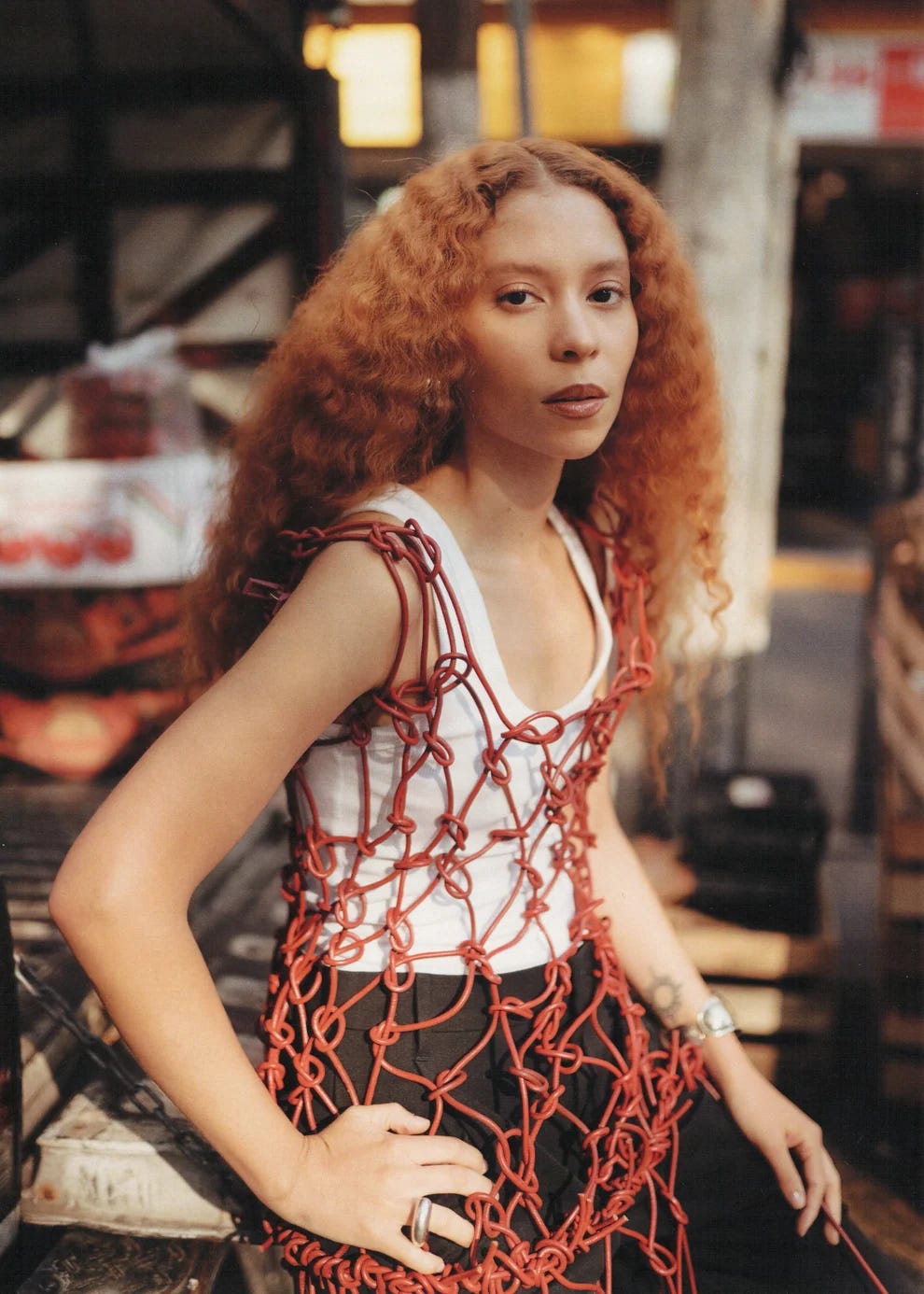
On her birthday in May 2017, Nia graduated from FIT without an exact plan to start her own label. But as stylists, photographers, and influencers were pulling pieces from her senior thesis collection, she continued to work on new designs. Her friends and roommates in Brooklyn quickly encouraged her to take that a little further and put on her own fashion show. At twenty-three, with no money, she thought it seemed plausible.
With a lot of favors, tears shed, and many late nights, they pulled it off. People started asking for her website. She didn’t have one, so she went to the Strand, bought a book on building websites, and taught herself to make one. Her description of that first attempt, “the shittiest Squarespace,” was considerably less flattering than anything you’d associate with her brand today.
Website, check. Then customers started asking where they could try the clothes on. So Nia began contacting stores around New York City that carried independent designers to introduce her brand.
She had gone to school for design, but the business side required another education. She knew how to sew and make patterns, but she was still learning what a line sheet was and how to write the emails that might get her clothes into stores. Looking back, she felt her training had better prepared her to work within someone else’s company.
She doesn’t recall classes offered on sustainability, building a website, or digital marketing. It was even too early for social media to be taken seriously. These became things she worked out through her twenties. Each chapter brought something else to learn, and she approached it with the same willingness that had gotten her first show off the ground.
⚀
There’s a certain nerve required to assert yourself in the highly competitive world of fashion, then take responsibility for designing, selling, and sustaining a label of your own. I asked her where that confidence came from.
Nia told me about cutting in line at group activities as a kid. Her mother remembers her starting to grab things and getting to work before everyone else. Nia recognizes that same quality today, describing herself as a “self-micromanager” who doesn’t like waiting for other people to get things done.
“If I want to do this and I know how to do it, I’m going to do it. If I don’t know how, I’m going to ask questions, do the research, and figure it out.”
An approach to business, and life, which has served her well.
⚀
In the spring of 2021, Nia came to Mexico for the first time. She had been accepted into an art residency in Oaxaca and immediately connected with the city. She remembers Indigenous communities speaking their native languages and artisans working by hand, practicing traditional techniques that date back millennia. As an artist herself, she wanted to understand more.
So she started speaking with locals, particularly women who crocheted. With tourism slowed by the pandemic, many of their businesses were struggling. Nia saw this as an opportunity to work together. She had ideas for pieces and asked if she could pay the women to make them with her. They began with cotton yarn, but pointed Nia to Mexico City when she inquired about wool, baby alpaca, and cashmere.
She fell in love with Mexico City in the same way she did Oaxaca. The pace, the weather, the kindness of its people. The cleanliness and vibrancy. The food! While sourcing yarn, she came across women knitting around shared tables and approached them about working together.
Some said no. Some of the women who said yes still work with her today.
It made sense for Nia’s production to continue here, and she wanted to be close enough to see and feel every part of the process. She returned to New York for about four months, sold things she no longer needed, and made the move that September.
⚀
When she first launched the label, she designed pieces she and her friends would want to wear. Colors, shapes and silhouettes she gravitated towards in her own wardrobe. As the brand evolved and entered wholesale stores around the world, feedback and sales naturally influenced the creativity. It was a business, and the clothes needed to sell. But even here, people remained central. What they wanted more of. What made them feel their best.
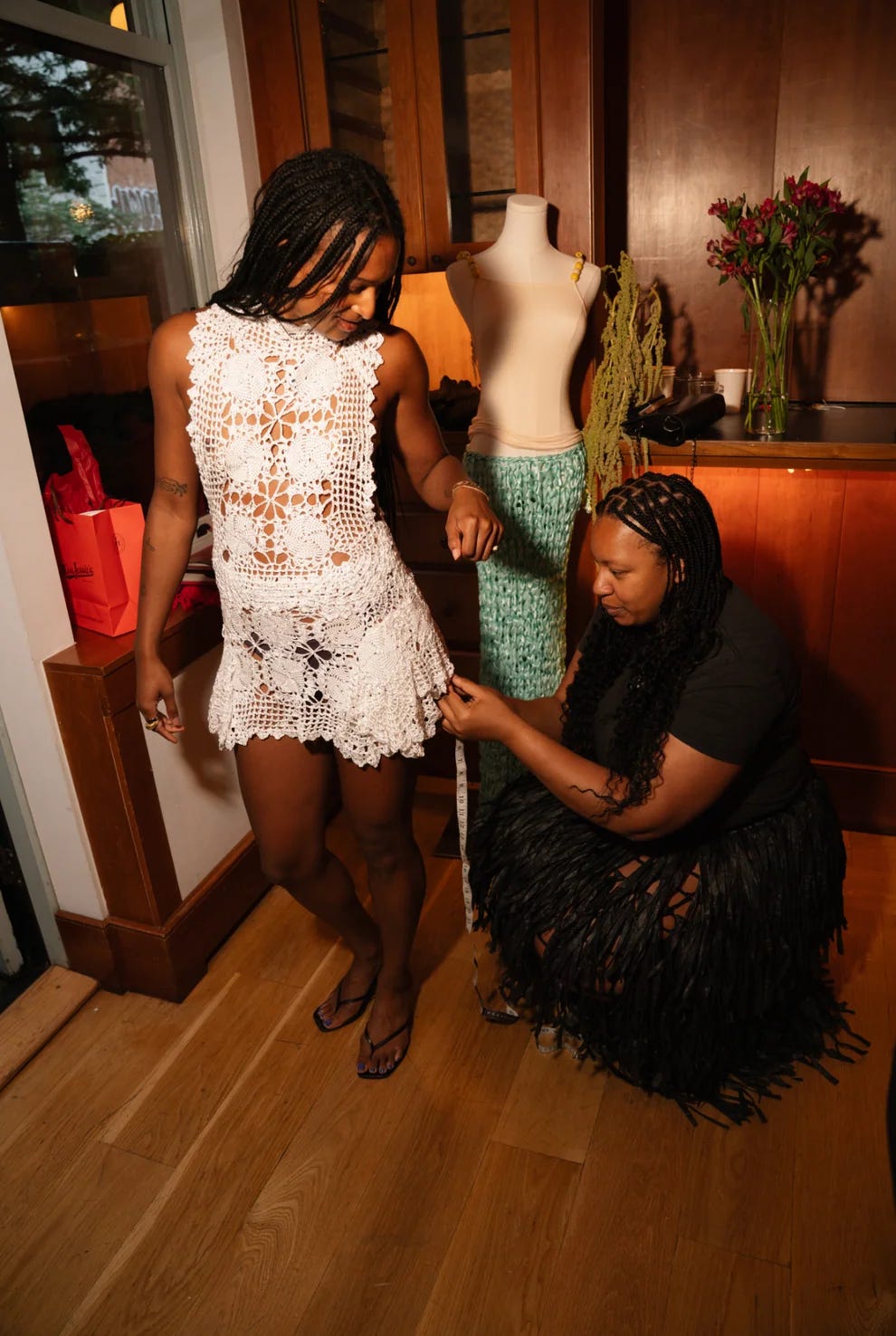
Today, in her Mexico City showroom, she observes which designs her customers gravitate towards. Those same customers can become models: a showroom visit might turn into a five-hour session of trying things on, playing with a neckline, imagining a shorter hem. Nia drapes fabric directly onto them, takes photographs, and sometimes sketches over the images later.
Travel offers another way of looking at how people dress. On trips to Bali, Japan, and Morocco, Nia finds inspiration in the colors and combinations locals wear. Paying close attention to choices that might feel familiar to the wearer can inspire a completely new design for her collection.
And then there’s material. One of my favorite Nia Thomas pieces is made from deadstock gift-wrapping ribbon. I asked Nia how it came about.
“There was a papelería near my old studio. It was going out of business and they had floor-to-ceiling products they were trying to get rid of. I was walking by and asked if it would be possible to pay a flat fee for all these ribbons. They said yes, if I could get everything out by the end of day.”
She came back fifteen minutes later with a wagon.
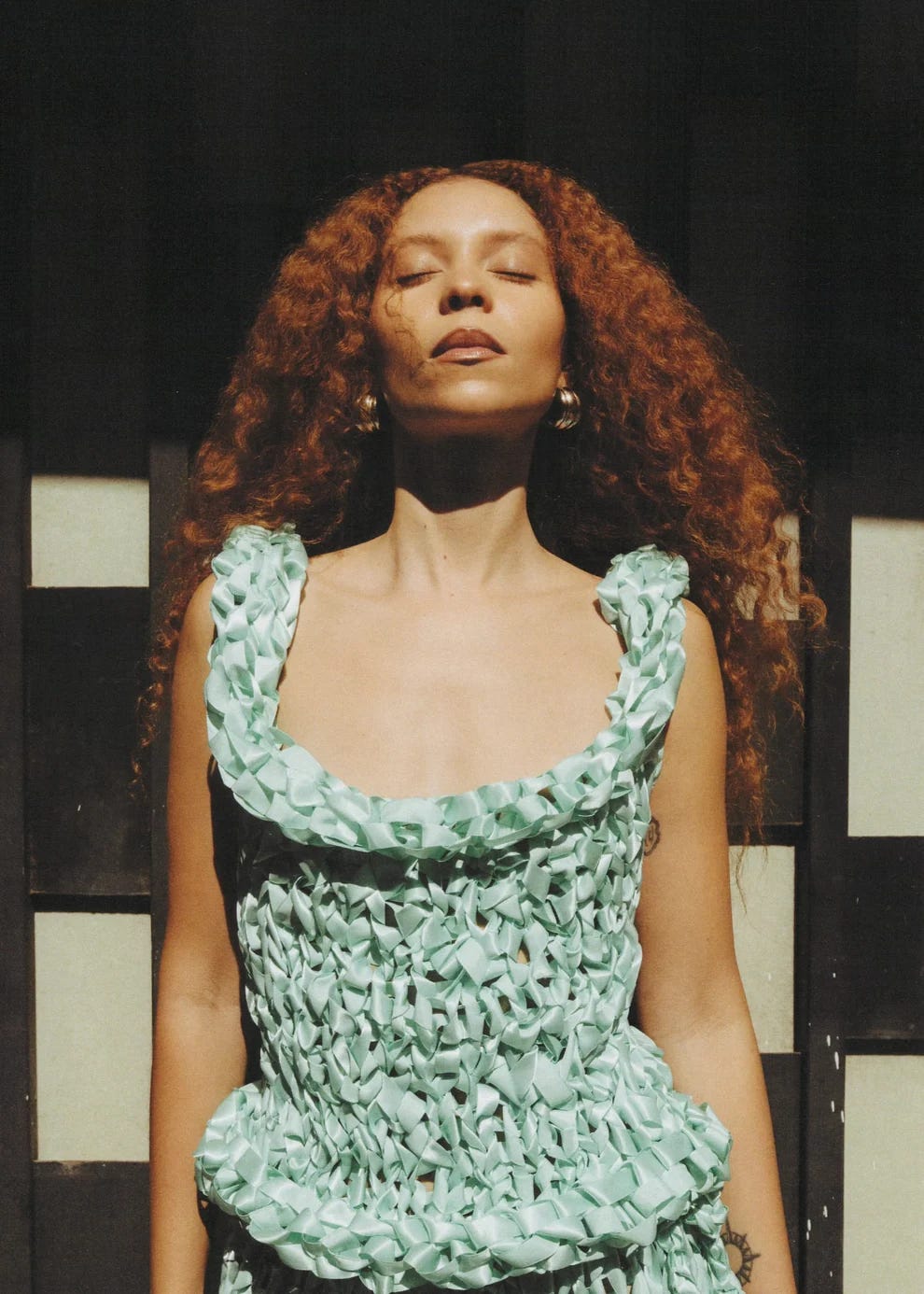
At first, she imagined using the ribbon for customer packaging. But the more she felt and played with the material, the more her imagination took over. She took the ribbon to one of her artisans to knit a small square, and from there, the Kailani Top and Skirt emerged.
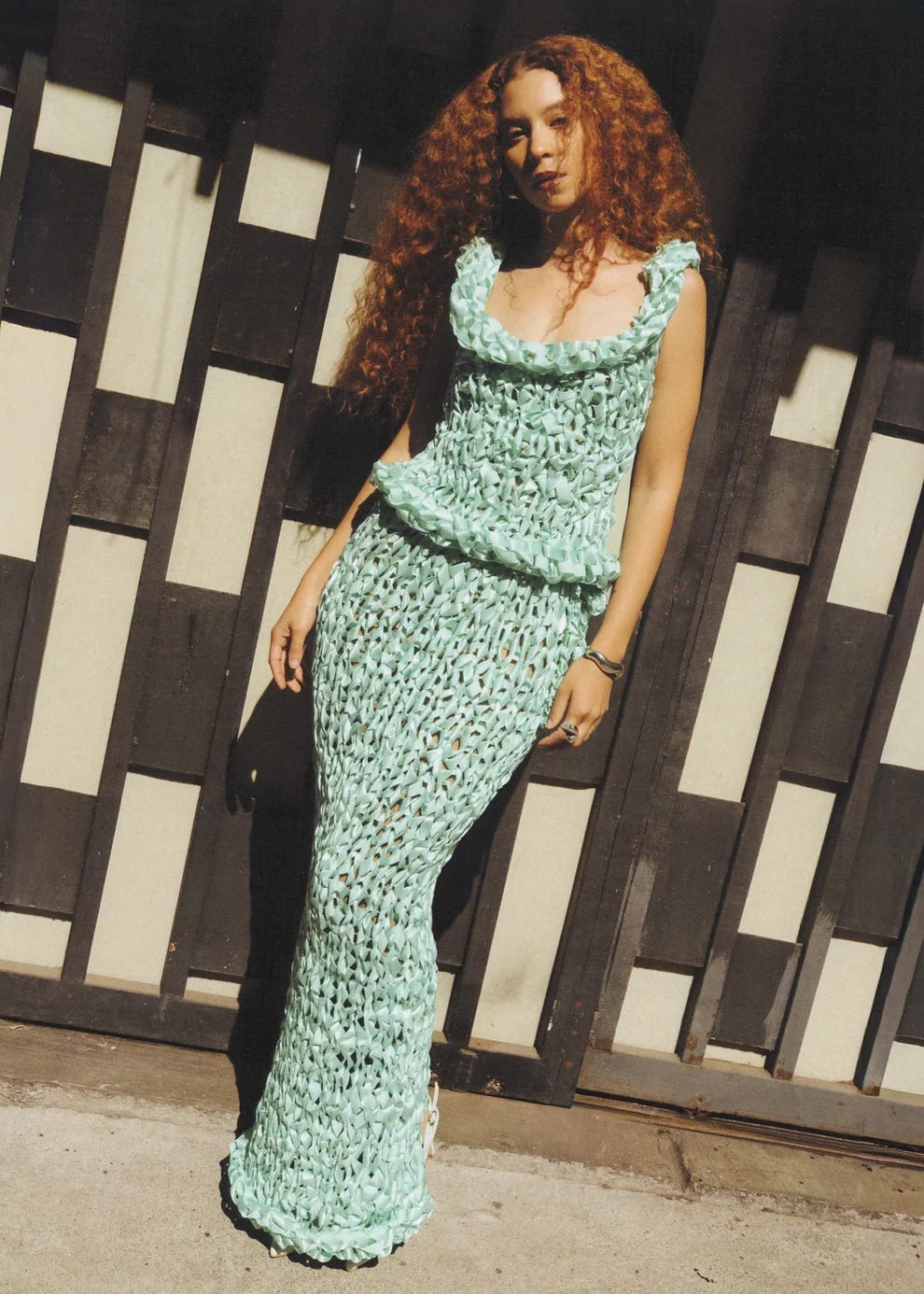
Nia generally prioritizes natural fibers, working with cotton, linen, and silk. The deadstock ribbon offered a chance to use something already made, in a new way. She wants customers to pay attention to what a piece is made from, to feel the material and understand the choices behind it.
⚀
With material playing a central role in her business, Nia is required to work with a range of suppliers. I’d read about an experience she had with someone at a textile shop who assumed she was a designer’s assistant, rather than the designer herself. I asked how she handles those moments, and what she would say to other women facing the same thing.
Nia’s response was direct. “I’m not going to give you my business.”
She’s willing to work with someone a little more expensive or a little slower to respond if they treat her with respect. A simple answer, but one that can take confidence to act on.
Somewhere in a world of billions of people, she reasons, there is another person selling thread. She reiterates the need to have respect for yourself and your craft. To know your worth and expect the people you work with to treat you accordingly.
⚀
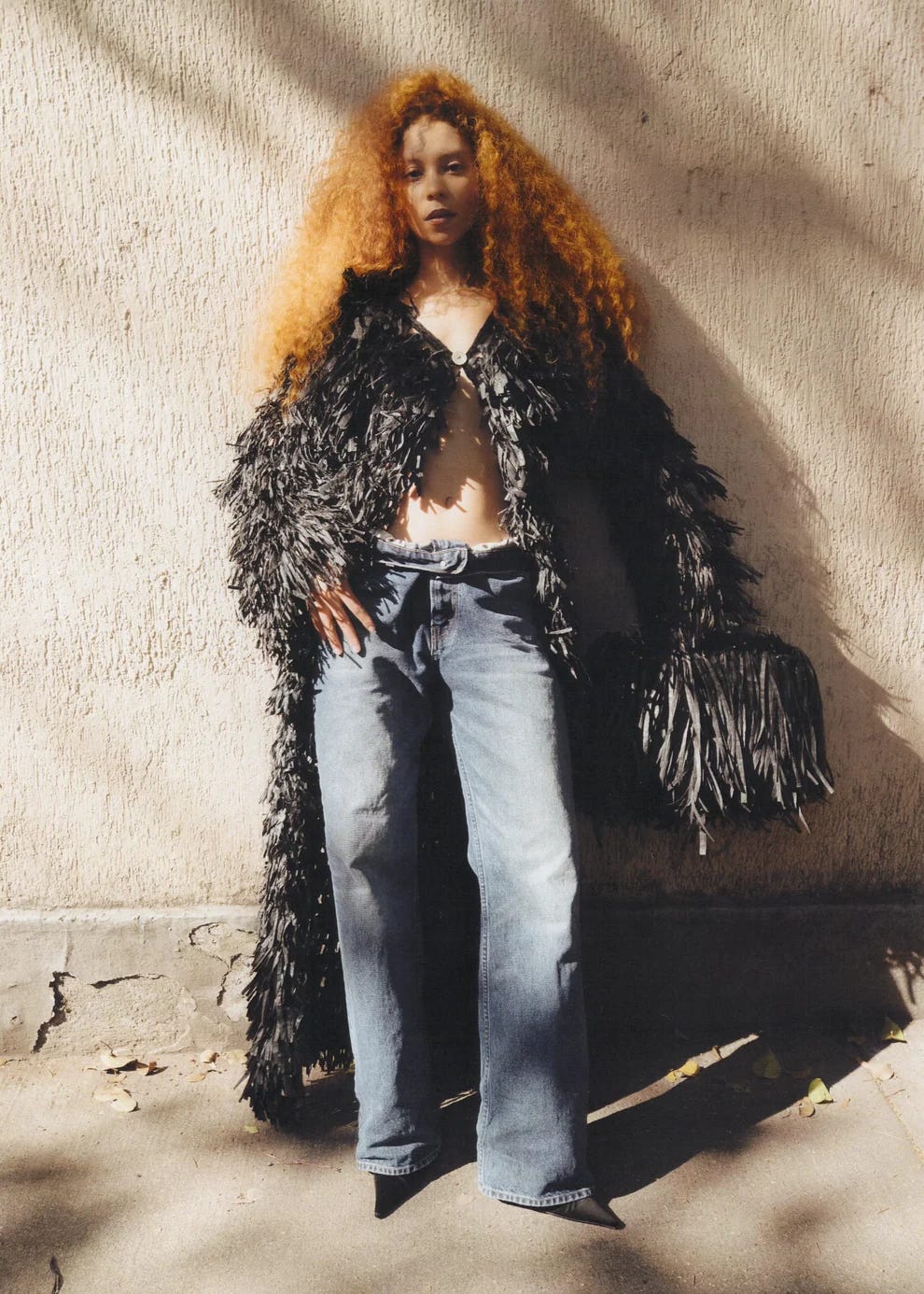
When I asked Nia what comes next, her first word that came to mind was “expand.” She’d just gotten the keys to a space in Mexico City for the store she plans to open in 2027.
Her showroom began with a few racks in her living room after visitors to the city started asking if they could come try on clothes. Getting to connect with people in person has become one of her favorite aspects of the business. Naturally, she’ll do the interiors herself, work with an architect friend on the construction, and make jewelry to sell alongside the clothes. She shared this with the kind of Nia-level excitement I’ve come to recognize. Another thing to learn.
At the same time, her team is growing. For years, she assumed she had to do everything herself. Hiring has meant challenging that belief, learning to delegate, and finding people she can rely on. People with strengths in areas she needs support, and people who can help her grow the company into what she knows it can become.
When we first spoke, I was struck by how easily Nia seemed to move through the things she wanted to do. By the end of our conversation, I understood how much practice she’d had. Learning to sew when she was terrible at it. Putting on a show with no money. Asking strangers if they wanted to make something with her. Each time, she gave herself the chance to find out what she was capable of.
Now she has a global brand, the keys to a store, and a growing team to build it with. I think of the girl who knew she wanted a creative life long before her parents could picture it. There must be something beautiful about watching your daughter, and niece, make that life tangible enough for you to walk through the door.


Discussion about this post